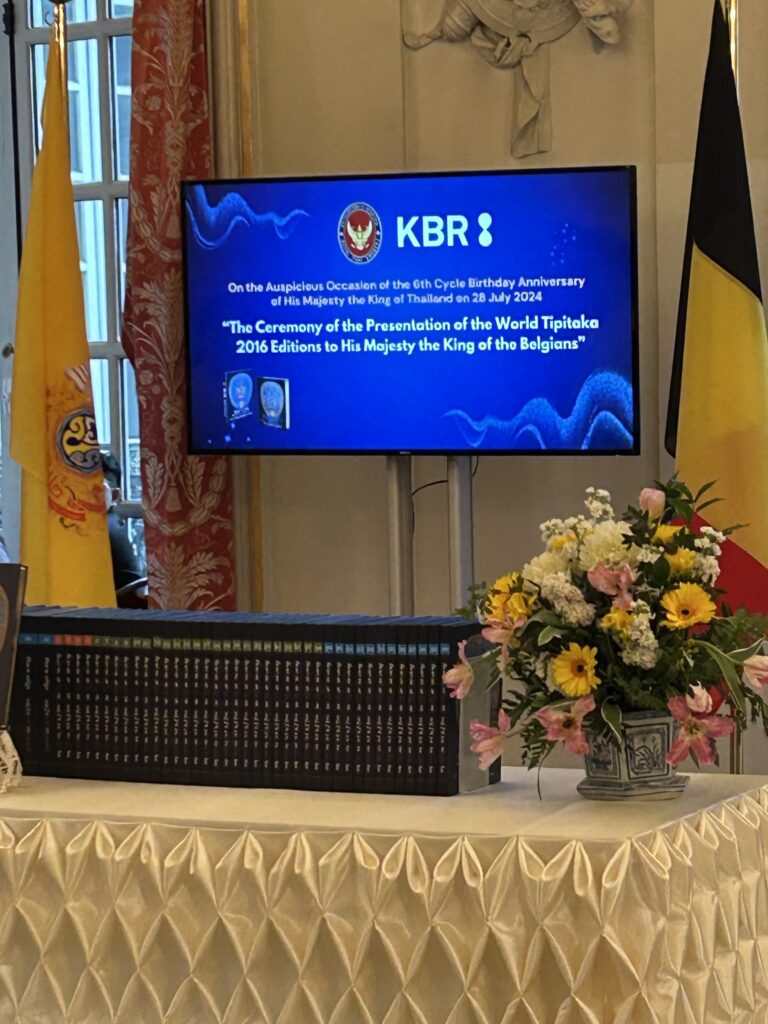
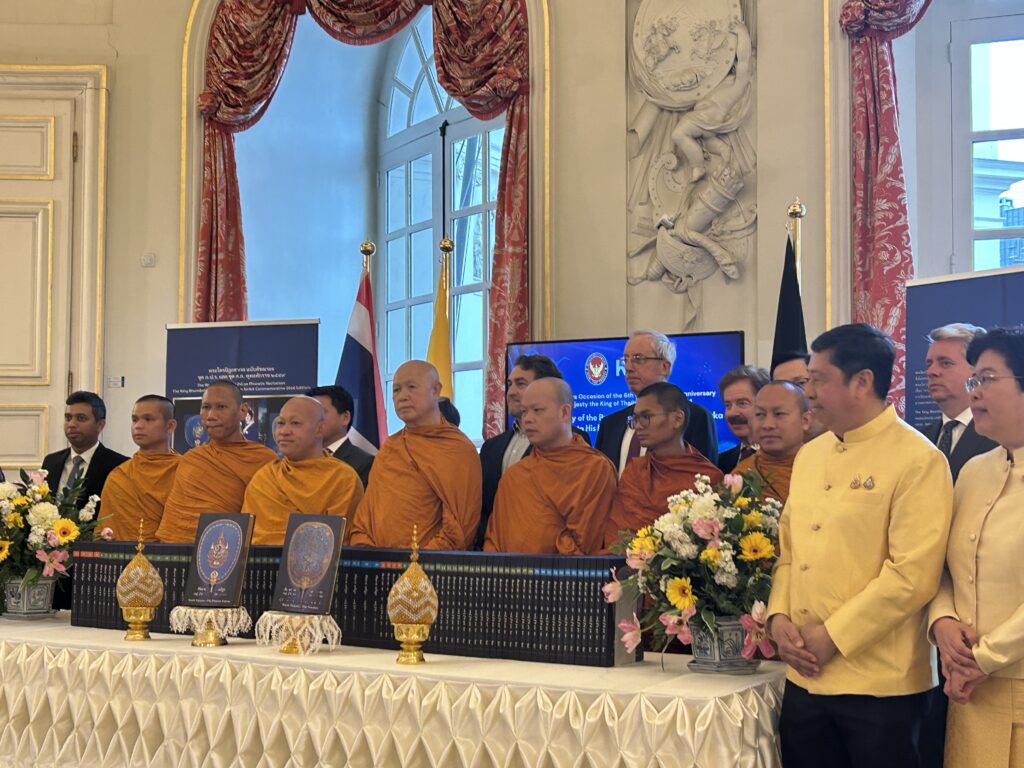
On May 15, 2025, the King of the Belgians received a special royal gift from the King of Thailand: a beautifully bound edition of the Pali Tipitaka, the foundational scripture of the Theravāda Buddhist tradition. The gift symbolizes the long-standing friendship and cultural ties between Thailand and Belgium, and highlights the importance of interreligious dialogue and mutual respect. This meaningful gesture reflects the shared value both countries place on preserving and honoring religious heritage. Head of the Ghent Centre for Buddhist Studies Prof. Dr. Ann Heirman attended the ceremony.
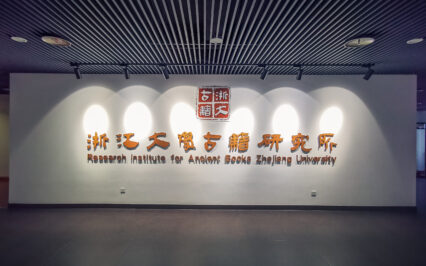
In February 2025, our postdoctoral researcher Dr. Laurent Van Cutsem returned from an enriching six-month stay as a Visiting Scholar at the Institute for Research on Ancient Books 古籍研究所 at Zhejiang University 浙江大學 in Hangzhou 杭州. His host was Prof. Feng Guodong 馮國棟, a leading expert on the Jingde chuandeng lu 景德傳燈錄, a landmark Chan historiographical text originally compiled in 1004 by the monk Daoyuan 道源 (d.u.).
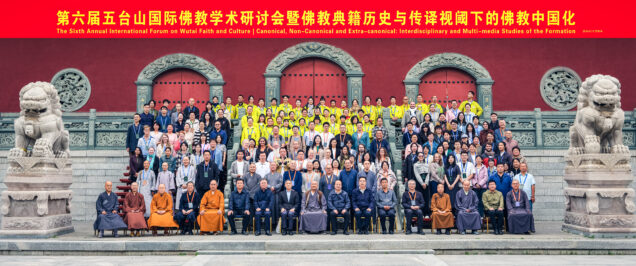
During his time in China, Dr. Van Cutsem presented papers at three international conferences. The first was International Conference “Canonical, Non-Canonical and Extra-Canonical: Interdisciplinary and Multi-media Studies of the Formation, Translation and Transmission of Buddhist Texts 佛教典籍的成立與傳譯視閾下的佛教中國化,” co-organized by The Wutai Shan Institute of Buddhism and Eastern Asian Culture 五臺山東方佛教文化研究院, the FROGBEAR project at the Univ. of British Columbia, and the Institute for Ethics and Religions Studies 道德與宗教研究院 at Tsinghua Univ. 清華大學 and held at Great Bamboo Grove Monastery 大聖竹林 on Mt. Wutai 五臺山 (August 11–15, 2024). Dr. Van Cutsem’s paper focused on focused on the role of Ānanda in Tang-Song Chan hagiography.
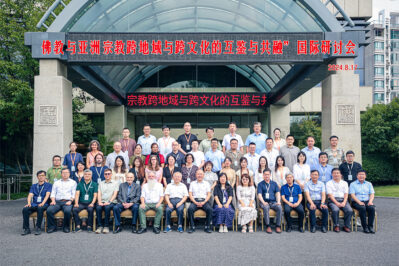
The second was International Conference “Cross-Regional and Cross-Cultural Interaction and Integration between Buddhism and Other Asian Religions 佛教與亞洲宗教跨地域與跨文化的互鑒與共融” (August 16–19, 2024), organized by the Center for Buddhist Culture Studies 佛教文化研究中心 at Zhejiang University 浙江大學, in collaboration with the Glorisun Global Network of Buddhist Studies, with administration support from the FROGBEAR project at the Univ. of British Columbia. Dr. Van Cutsem’s paper explored quotations from the influential Baolin zhuan 寶林傳 preserved in the little-studied 14th-century Keitoku dentō shōroku 景德傳燈鈔錄.
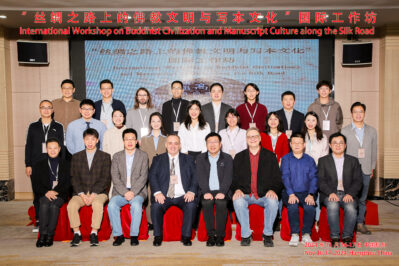
At the third conference—“Buddhist Civilization and Manuscript Culture along the Silk Road” 絲綢之路上的佛教文明與寫本文化 (Zhejiang University, November 15–18, 2024), organized by Prof. Hou Haoran 侯浩然—he presented research on the Shengzhou ji 聖冑集 and the Dunhuang manuscript Or.8210/S.4478. In addition to his presentation, he also served as a discussant for Prof. Kirill Solonin’s paper on Tangut-language Chan texts from the Western Xia 西夏 empire.
While at Zhejiang University, Dr. Van Cutsem attended select classes by Imre Galambos and Zhang Yongquan 張湧泉, both renowned specialists in Dunhuang studies and manuscript culture. He also did archival research and exchanged ideas about his ongoing projects with several professors, including Feng Guodong, Imre Galambos, Dou Huaiyong 竇懷永, and Chen Ruifeng 陳瑞峰.
He returned to Ghent with a rich collection of photographs documenting sites associated with the Zutang ji 祖堂集, another key Chan historiographical text compiled in Quanzhou 泉州 in the mid-10th century and the central focus of his Ph.D. dissertation, and from his visits of several museums and special exhibitions in Hangzhou.
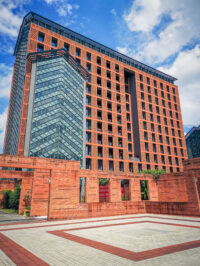
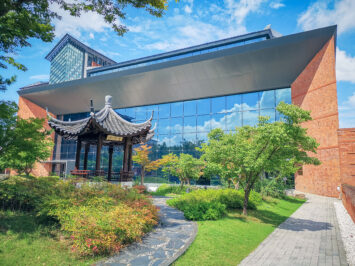
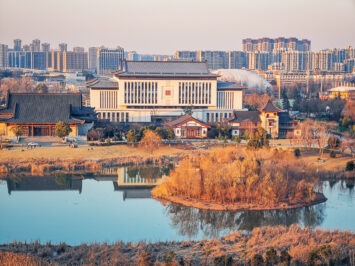
Research Institute for Ancient Books 古籍研究所, Zhejiang UniversityBuilding of the School of Literature 文學院, School of History 歷史學院, and School of Philosophy 哲學學院, Zhejiang UniversityLibrary of the Research Institute for Ancient Books 古籍研究所圖書館, Zhejiang UniversityPart of the Zijingang 紫金港 campus, Zhejiang University. View on the main libraryInternational Conference “Canonical, Non-Canonical and Extra-Canonical: Interdisciplinary and Multi-media Studies of the Formation, Translation and Transmission of Buddhist Texts,” Mount Wutai 五臺山, August 11–15, 2024.International Conference “Cross-Regional and Cross-Cultural Interaction and Integration between Buddhism and Other Asian Religions ,” Zhejiang University, August 16–19, 2024International Workshop “Buddhist Civilization and Manuscript Culture along the Silk Road,” Zhejiang University, Nov. 15–18, 2024
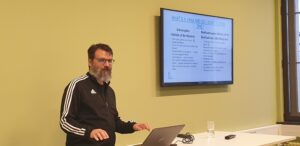
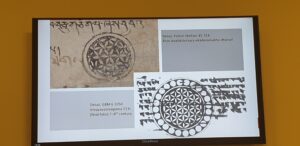
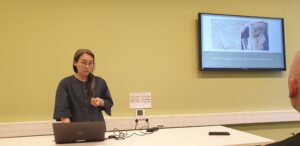
On Tuesday, May 6, 2025, a captivating lecture titled “Everything You Didn’t Know You Ever Wanted to Know about Buddhist Manuscript Cultures in Greater Gandhāra” was delivered by GCBS’s Prof. Charles DiSimone as part of our Permanent Training in Buddhist Studies lecture series. The lecture explored the fascinating manuscript cultures of Greater Gandhāra, an area that once served as a thriving center of Buddhist activity and flourished well into the first millennium CE. This region, which spans modern-day Afghanistan, Pakistan, and northern India, was a pivotal crossroads for the development of Buddhist thought and practices.
One of the key insights shared in the lecture was the use of birch bark, rather than paper, as the primary medium for Buddhist manuscripts in Gandhāra. Birch bark, a durable and flexible material, was ideal for preserving the intricate texts that would define the Buddhist literary heritage of the region.
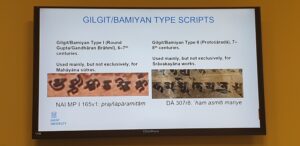
The lecture shed light on the unique artistic elements found in these manuscripts, particularly the use of arsenic pigments and floral embellishments to highlight rubrics. It also emphasized the use of Bamiyan type I and Bamiyan type II scripts for recording Mahāyāna and Śrāvakayāna texts respectively.
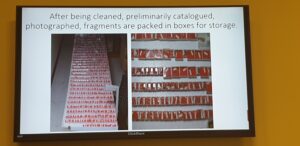
Throughout the lecture, Prof. DiSimone emphasized the importance of several major manuscript discoveries that have enriched our understanding of Buddhist manuscript cultures. These include notable finds in locations such as Gilgit, Bamyan, and Mes Aynak. At the same time, he cautioned against using the cashes found there for making overall statements about the Buddhist tradition of the region, as they represent only a small portion of what originally circulated there. In the final part of the lecture, Prof. DeSimone introduced the recent excavations of in Mes Anyak and the work for digitalization of manusctipts his team carries out within the framework of his ERC project “Corpora in Greater Gandhāra. Tracing the development of Buddhist textuality and Gilgit/Bamiyan manuscript networks in the first millennium of the common era”.
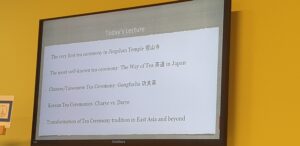
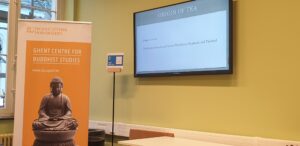
As part of the Permanent Training in Buddhist Studies lecture series, Prof. Jin Kyoung Choi (Ghent Centre for Buddhist Studies) delivered a talk titled “Buddhist Material Culture in East Asian Tea Tradition: The Way of Tea, the Art of Tea, and Tea Ceremony” on Tuesday, 29 April 2025, at the Faculty Library of Arts and Philosophy, Ghent University.
This rich and insightful lecture traced the historical and cultural evolution of the tea ceremony across East Asia, unfolding in five compelling chapters. Prof. Jin began at the spiritual heart of China’s tea culture: Jingshan Temple 径山寺 in Hangzhou, which is widely recognized as the birthplace of the formal tea ceremony. The lecture then took us across the sea to Japan, where Chinese tea culture took on a new life. During the Northern Song dynasty, powdered tea (Ch. mǒchá; J. macha 抹茶) was brought to Japan by monks and evolved into the world-renowned Japanese tea ceremony. Known as chadō 茶道—the Way of Tea—it became deeply embedded in Zen Buddhist practice and Japanese aesthetics. Turning back to the Sinosphere, the focus shifted to gongfucha 功夫茶, the high-skill brewing method that originated in the Chaozhou region of Guangdong. This practice was carried to Taiwan, where it took root and evolved. Oolong tea, in particular, became Taiwan’s most celebrated varietal.
An especially intriguing part of the lecture explored how modern Chinese and Taiwanese societies are negotiating the cultural legacies of tea. The term chadō is rarely used in contemporary China or Taiwan due to its strong association with Japanese tea tradition. Instead, Taiwan promotes chayi 茶艺(art of tea), emphasizing artistic expression and cultural refinement, while mainland China has been working to revive the ancient Song-style powdered tea ceremony as a distinct national heritage. The lecture also shed light on Korea’s distinct tea practices, charye and darye.
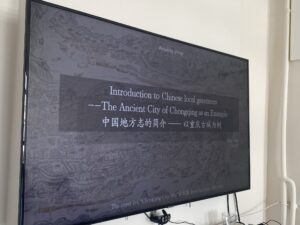
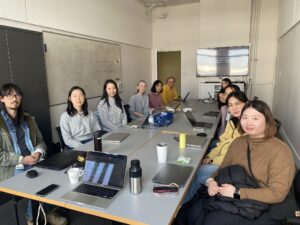
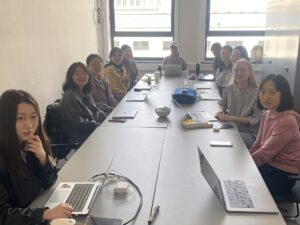
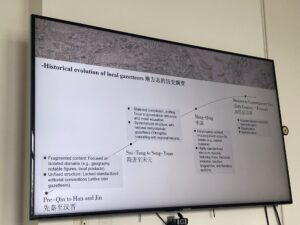
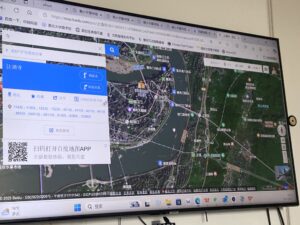
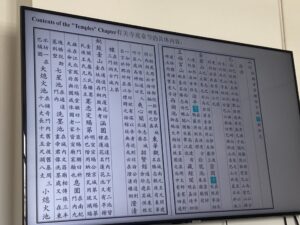
After the Easter break, we resumed our Reading Group activities. For the remainder of the term, we will focus on Ming and Qing dynasties local gazetteers (方志) of the Chongqing area and the historical information they provide on the Buddhist temples of the city.
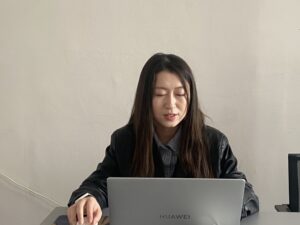
Our Joint Phd student Siqi Tang (Chongqing and Ghent Universities) presents the materials and will guide the reading. In the first meeting, she gave a very thorough introduction to the various types of gazetteers, how to find and use gazetteers databases, in addition to introducing us to this genre of historical records.
We are delighted to welcome Lin Wushi to the Ghent Centre for Buddhist Studies as a joint PhD student under the supervision of Professor Bart Dessein (Ghent University) and Professor Weijen Teng (Dharma Drum Institute of Liberal Arts). His research interests include the history of Buddhist thought, with a particular emphasis on Chinese Buddhism and Chan Buddhism.
In his doctoral project, titled “Comprehending Everything as Oneself: The No-Self Doctrine of Zibo Zhenke in Ming Dynasty Buddhism,” Wushi explores the significance, characteristics, and hermeneutics of the no-self doctrine (Skt. anātman; Ch. 無我) in late Ming Buddhism. Focusing on the influential monk Zibo Zhenke (紫柏真可, 1543–1604), his research reveals how the Chinese understanding of no-self diverges from the primarily ontological concerns of Indian Buddhism, taking instead an epistemological orientation. Zibo’s interpretation of no-self as a cognitive model of non-duality between subject and object is further examined as a response to contemporary intellectual trends such as Yangmingism (陽明學) and the dynamic interactions among Confucianism, Daoism, and Buddhism in the late Ming period.
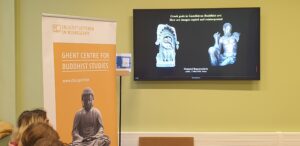
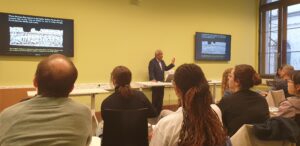
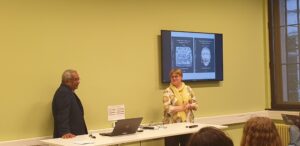
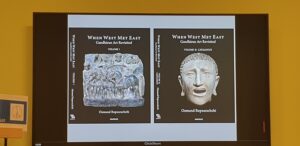
As part of the Permanent Training in Buddhist Studies lecture series, Prof. Osmund Bopeararchchi (University of Lens) delivered a talk titled “Greek gods in Gandhāran Buddhist art: How are images copied and reinterpreted” on Tuesday, 22 April 2025, at the Faculty Library of Arts and Philosophy, Ghent University.
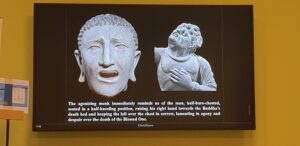
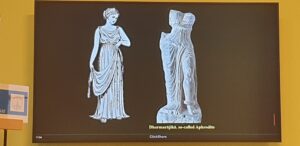
Prof. Bopearachchi opened his lecture by outlining the historical context of the Gandhāra region, a unique cultural crossroads shaped by the Greek presence north of the Hindu Kush mountains following Alexander the Great’s conquests. He then explored how Greek motifs were incorporated into Gandhāran Buddhist art, demonstrating the influence through elements such as realistic facial expressions, Corinthian columns, Hellenistic furniture, clothing, and ornamentation. These were contrasted with artistic representations found in production centers south of the Hindu Kush, highlighting regional stylistic differences.
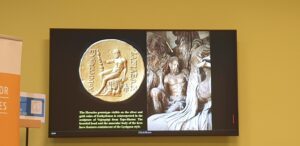
The lecture then turned to the presence of Greek deities in Gandhāran art. Among them was Tyche (Fortuna), the goddess of success, who often appeared as the genius loci—the protective spirit of a city. Another significant example was Heracles, who was reinterpreted as Vajrapāṇi, the protector of the Buddha, typically shown wielding a thunderbolt in place of his traditional club.
The talk concluded with a discussion on the Dionysian cult of viticulture and wine consumption. Prof. Bopearachchi shared his recent research identifying scenes of joyful wine-drinkers not merely as bacchic revelry, but as representations of gandharvas—celestial musicians and dancers from the demigod realm in Buddhist cosmology.
Siqi Tang is a visting PhD student sponsored by the China Scholarship Council (CSC) within the Department of Languages and Cultures at Ghent University. She holds a Master’s degree in Landscape Architecture from Chongqing University and is currently pursuing a PhD in Landscape Architecture at Chongqing University. Her research interests include Chinese urban history, Chinese landscape history, Chinese scenic heritage, and digital humanistic methods.
Her current research project “Research on the Influence of Buddhism on the Historical ‘City-Mountain’ Landscape in Southwest China“, supervised by Prof. Dr. Christoph Anderl, systematically investigates Buddhist cultural landscapes, urban monasteries, pagodas, and rock carvings—and their mechanisms in shaping historical urban forms with a focus on Southwest China. By analyzing these elements, the research aims to uncover the socio-cultural roots of Buddhism’s localization, deepen our understanding of the relationship between traditional Chinese religions and urban development, and enhance interpretative frameworks for religious-cultural landscapes. The findings will hold significance for guiding the preservation of relevant historical heritage sites and advancing interdisciplinary discourse on religious geography and urban history.
Jing Liu is a visting PhD student within the Department of Languages and Cultures at Ghent University. She holds a Master’s degree from Shanghai University and is currently pursuing a PhD there. Her current research project “Bide 比德: A Study on the Premodern Chinese Approach to the Integration of Morality and Aesthetics–An Examination of the Interaction between Confucian and Buddhist Aesthetics“, supervised by Prof. Dr. Christoph Anderl, explores the Confucian tradition of bide and its theoretical manifestations in literature and art, with a particular focus on the interaction between Confucian and Buddhist aesthetics as a key case study. In the history of ancient Chinese thought, bide 比德 initially existed as a universal mode of thinking with anthropological significance, referring to the association of certain human behaviors or concepts with the characteristics of natural entities. In ancient times, bide was closely associated with Confucian moral thought. However, the literary and artistic concepts that emerged from it gradually exhibited characteristics that diverged from morality and could be identified as aesthetic phenomena. Accordingly, the project will explore how bide evolved into a tradition that integrates morality and aesthetics.
As part of the Permanent Training in Buddhist Studies lecture series, on March 11th, Lyce Jankowski and Lara Bauden from the Royal Museum of Mariemont took us through their fascinating research on the museum’s Buddhist art collection. This collection, founded by Raoul Warocqué in the early 20th century, includes treasures from regions like Gandhara, Thailand, Vietnam, China, Japan, and Nepal. Despite its richness, many of these pieces had been poorly documented—until now!
Through meticulous provenance research, they’ve uncovered surprising findings, shedding new light on the identification and dating of these artworks. Don’t miss the ongoing exhibition Sensing the Buddha, where you can experience a selection from this remarkable collection. While displayed in a secular space, the exhibition deeply respects the sacred nature of these objects.