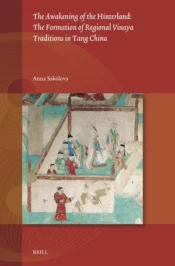
GCBS researchers Dr. Anna Sokolova and Dr. Mariia Lepneva contributed numerous entries to the Encyclopedia of Hangzhou Buddhist Culture, project led by the Centre for Buddhist Studies at the University of Arizona.
Hangzhou, the Chinese capital during the Song dynasty (960-1278), has been a cultural and economic hub for centuries and played a crucial role in the spread of Buddhism throughout East Asia, particularly in the case of Chan (J. Zen; K. Sŏn) Buddhism. The Encyclopedia of Hangzhou Buddhist Culture is the first dedicated reference source for Hangzhou’s Buddhist heritage and its associated cultural legacies. Hangzhou’s cultural prominence expands beyond the monasteries and subsumes fine arts, material culture, and intellectual history. This Encyclopedia includes people, places, texts, industries, arts, concepts, and schools from pre-Tang China all the way through the Republican Period.
Wu, Jiang, eds. Encyclopedia of Hangzhou Buddhist Culture. Leiden, The Netherlands: Brill, 2025.

Anna Sokolova contributed the following entries:
- Dongyu Dehai 東嶼德海 (1256–1327).
- Hengchuan Rugong 横川如珙 (1222–1289)
- Huiji Yuanxi 晦機元熙 (1238–1319)
- Jingsou Rujue 荆叟如珏 (ca. eighth century)
- Zhu Pengnian 朱彭年 (1837–1896) (together with Pua Shiau Chen)
Mariia Lepneva contributed the following entries:
- Baiting Xufa 伯亭續法 (1641–1728)
- Baojing 寳靜 (1899–1940)
- Changxing 常惺 (1896–1939)
- Chen Zujing 陳祖經 (1892–1972)
- Chisong 持松 (1894–1972)
- Cizhou 慈舟 (1877–1958)
- Daxing 大醒 (1899–1952)
- Dayong 大勇 (1893–1929)
- Du Shenfu 堵申甫 (1884–1961)
- Fakai 法開 (d.u.)
- Falin 法林 (1284–1355)
- Fashen 法詵 (718–778)
- Gaoshu Mingchuang 杲樹明幢 (ca. eighteenth century)
- Guxin Ruxin 古心如馨 (1541–1616)
- Hongsan 弘傘 (1889–1971)
- Huang Hanzhi 黃涵之 (1875–1961)
- Huiji 慧基 (412–496)
- Huiji. 慧集 (456–515)
- Huileng 慧稜 (854–932)
- Jiang Yiyuan 江易園 (1876–1942)
- Jieliu Xingce 截流行策 (1628–1682)
- Jing Hengyi 經亨頤 (1877–1938) (together with William Chin-fung Ng)
- Jingquan 靜權 (1881–1960)
- Jingzhong Puzhuang 敬中普莊 (1347–1403)
- Juezong Shanji 絕宗善繼 (1286–1357)
- Juzan 巨贊 (1904–1984)
- Lanwu 懶悟 (1900–1969)
- Li Hongliang 李鴻梁 (1895–1972)
- Liu Jingchen 劉景晨 (1880–1960)
- Liu Zhiping 劉質平 (1894–1978)
- Ma Jiangshi 馬絳士 (1873–1937)
- Mao Zijian 毛子堅 (1882–1954)
- Nie Yuntai 聶雲台 (1880–1953)
- Qingtian 清天 (d.u.)
- Qingyuan Huaiwei 清遠懷渭 (1318–1375) (together with Guangzuo Jia)
- Shaojue Guangcheng 紹覺廣承 (1560–1609). (together with Jiang Wu)
- Shuyu 書玉 (1645–1721)
- Song Pingzi 宋平子 (1862–1910)
- Su Manshu 蘇曼殊 (1884–1918)
- Sun Xuanqing 孫選青 (1887–1971)
- Tongru 通如 (d.u.)
- Wu Bihua 吳璧華 (1877–1926) (together with Guangzuo Jia)
- Wu Mengfei 吳夢飛 (1892–1962)
- Wushan Chinese Buddhist Vinaya Institute (Wushan Zhongguo Fojiao Lüxueyuan 吳山中國佛教律學院)
- Xingyuan 性願 (1889–1962)
- Yang Baimin 楊白民 (1874–1924)
- Ye Weiming 葉為銘 (1866–1948)
- Yekai 冶開 (1852–1922)
- Yingci 應慈 (1873–1965)
- You Mojun 尤墨君 (1888–1971)
- Youzhang 幼璋 (841–927)
- Yuexi 月溪 (1879–1965).
- Yunqi Jiaoxi 雲棲交熙 (1823–1883)
- Zhifeng 芝峰 (1901–1967)
- Zhou Mengyou 周孟由 (1877–1958)
 GCBS’s former member Dr.
 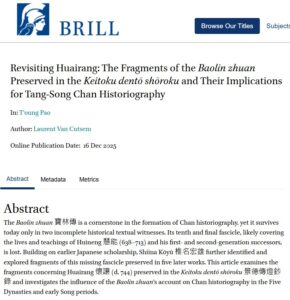 Revisiting Huairang: The Fragments of the Baolin zhuan Preserved in the Keitoku dentō shōroku and Their Implications for Tang-Song Chan Historiography
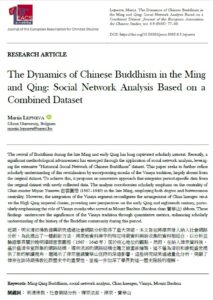 The Dynamics of Chinese Buddhism in the Ming and Qing: Social Network Analysis Based on a Combined Dataset
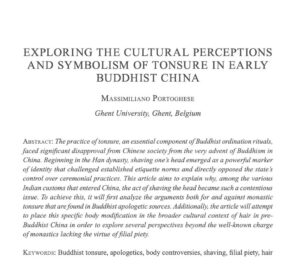 Exploring the Cultural Perceptions and Symbolism of Tonsure in Early Buddhist China
 GCBS’s former member
 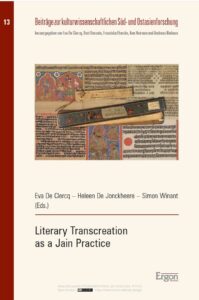 New open-access book
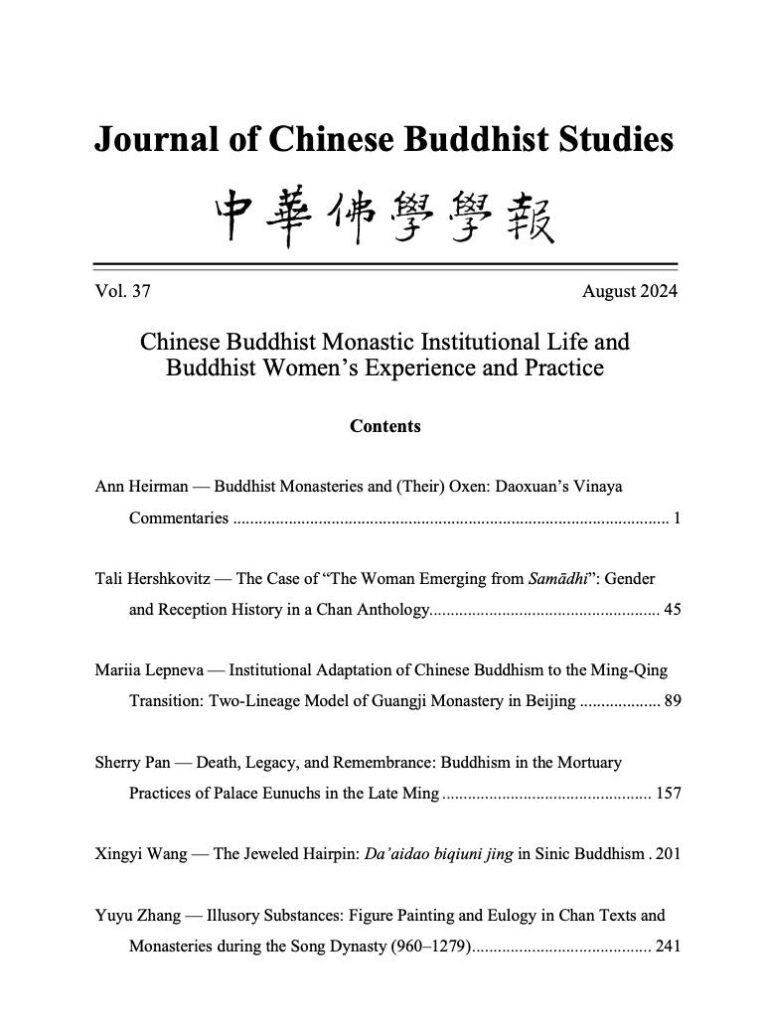
 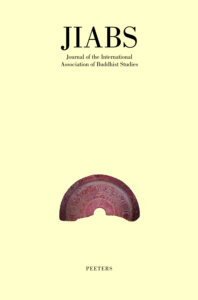 Articles from two GCBS researchers have just been published in the
 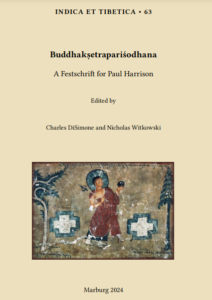 New Book Announcement: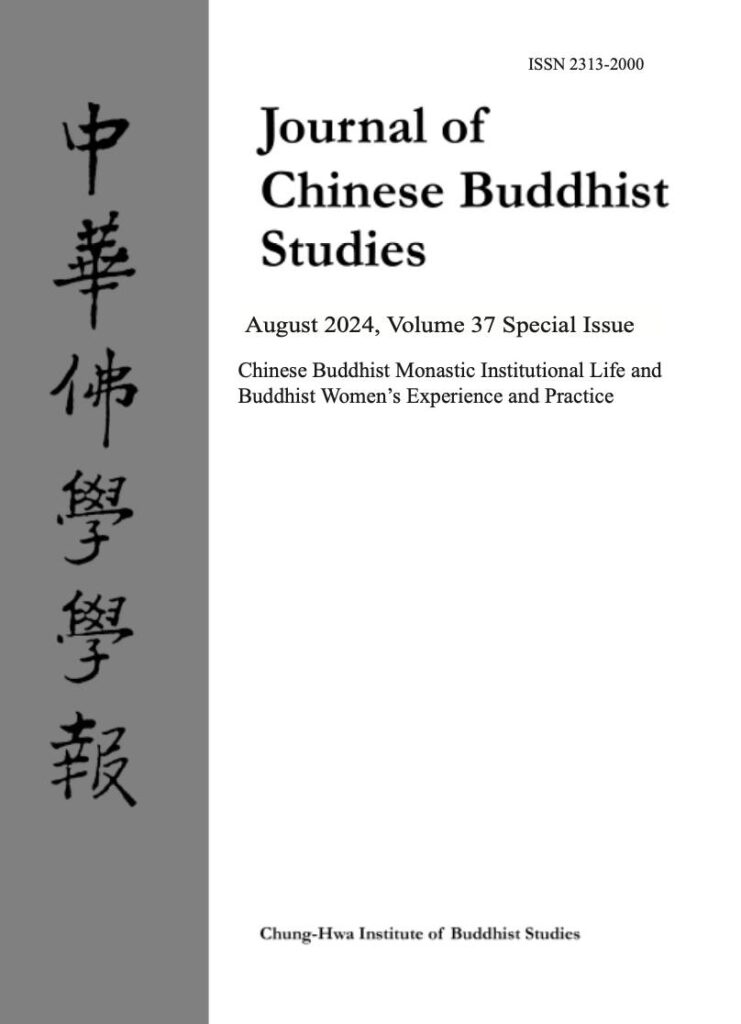
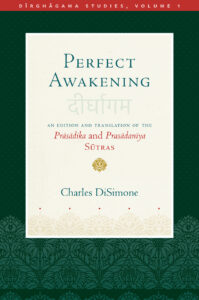 The Long Discourses, or