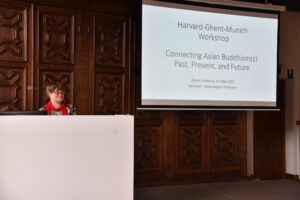
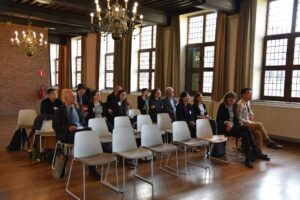
Abstract: Our Spring 2023 Lecture Series highlights a diverse spectrum of topics related to Buddhism. The lectures take place on Tuesday evenings from 7–9PM CET, and will be hybrid (delivered in person while streamed simultaneously).
The physical location is at Ghent University in Room 0.4 (Blandijnberg 2, 9000 Ghent) unless otherwise stated. The series is open to anyone interested in Buddhist Studies.
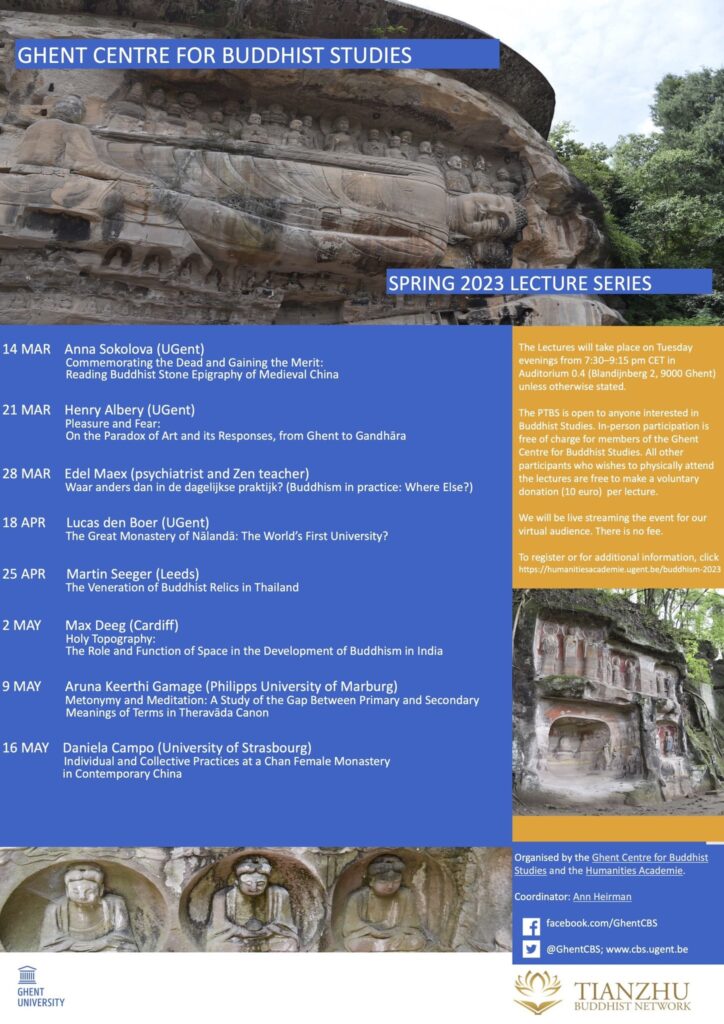
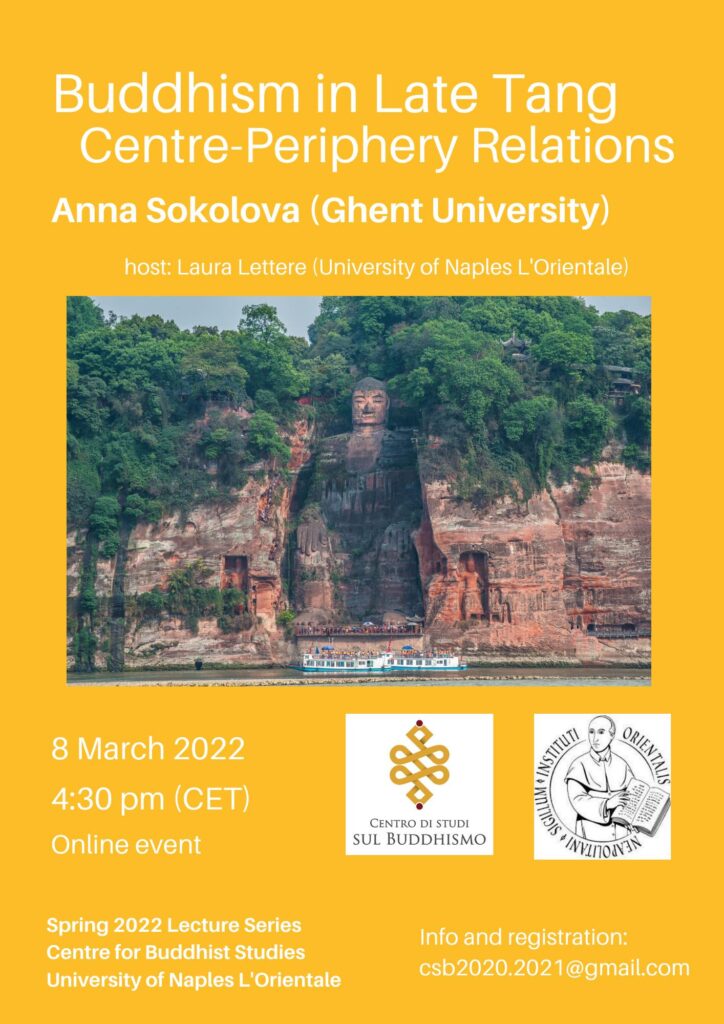
March 14: Anna Sokolova (UGent)
“Stone Inscriptions as Source Material in the Doctrinal and Social History of Medieval Chinese Buddhism”
Whenever a renowned Buddhist monk passed away in medieval China, his disciples, lay followers, and state officials collaborated to establish a stele with a carved epitaph relating to the life of the deceased master. Other common reasons for the establishment of a commemorative, inscribed stele were the foundation of a significant institution, such as a monastery or ritual sanctuary, and the erection of a statue. Although very few of these medieval Buddhist stelae inscriptions are still in situ, a large corpus of texts has been transmitted in literary collections, and several important memorials have been excavated over the last century. This talk will focus on medieval Buddhist epigraphy from the seventh to the tenth century with a view to explaining its value as source material on early Chinese Buddhist communities and their interactions with secular society from a variety of perspectives. Specifically, these sources will be referenced to address such key questions as: How did Buddhist identities and lineages evolve in medieval China? What was the role of the imperial court and state bureaucrats in the formation and growth of regional Buddhist communities? And how did certain ritual practices emerge and develop? The talk will also touch upon the methodology of working with Buddhist epigraphy, such as the application of Social Network Analysis (SNA) in studies of Chinese medieval Buddhism.
March 21: Henry Albery (UGent)
“Pleasure and Fear: On the Paradox of Art and its Responses, from Ghent to Gandhāra”
In person/online
March 28: Edel Maex (psychiatrist and Zen teacher) (in Dutch)
“Waar anders dan in de dagelijkse praktijk?”
Je kunt het boeddhisme vanuit verschillende invalshoeken benaderen. Voor een filosoof is het een filosofie en voor een godsdienstwetenschapper een geloof. En ook wie op zoek is naar sjamanisme en magie kan er zijn gading in vinden. Voor vele Aziaten maakt het deel uit van de vanzelfsprekende culturele achtergrond. Een Westerling daarentegen kan zich juist door de exotiek ervan aangesproken voelen. Maar misschien is het boeddhisme in de eerste plaats een praktijk. En ook al heeft de praktijk van meditatie, vooral het in het Westen, daarin een belangrijke rol, uiteindelijk komt het neer op de praktijk van het dagelijkse leven.
“Buddhism in practice: where else?”
One can approach Buddhism from different angles. For a philosopher it is a philosophy and for a scholar of religion a faith. And those looking for shamanism and magic can also find their likings in it. For many Asians, it is part of the natural cultural background. A Westerner, on the other hand, may feel drawn to it because of its exoticism. But perhaps Buddhism is first and foremost a practice. And even though the practice of meditation, especially in the West, has an important role in it, ultimately it comes down to the practice of daily life.
April 18: Lucas Vanden Boer (UGent)
“The Great Monastery of Nālandā: The World’s First University?”
Nālandā mahāvihāra was a large Buddhist monastery in the East of India which flourished from the 5th until the early 13th century CE. In its heyday, it attracted thousands of students from all over Asia who did not only study the Buddhist scriptures but also learned sciences, such as grammar, philosophy, and medicine. For this reason, the monastery of Nālandā is often portrayed as a university. However, the labelling of Nālandā as a university in some early scholarly publications has led to many ahistorical claims and fantasies in later academic and popular literature. In my talk, I will discuss what we actually know about Nālandā as a centre of knowledge and learning. I will also explore the merits and demerits of using the European label ‘university’ for a Buddhist institute of knowledge that predates the foundation of the first European universities for more than half a millennium.
April 25: Martin Seeger (University of Leeds)
“The veneration of Buddhist relics in Thailand”
Relics, stūpas (sacred monuments containing Buddhist relics), and amulets are key elements of Thai Buddhist culture. Discussing a number of relevant case studies, I will demonstrate the importance of studying material culture when trying to better understand religion. I will address the following questions: How can we explain the fascination with (Thai Buddhist) relics? How does our understanding of (Thai) religion change when we also consider material culture? What can we learn from a study that focuses on the veneration of Buddhist relics? Thus, I will show that material objects, such as relics and stūpas, often have a much wider and profound impact on religious practices, beliefs and emotions than canonical and other important Buddhist texts.
May 2: Max Deeg (Cardiff University)
“Holy topography: The role and function of space in the development of Buddhism in India”
This talk will focus on the conceptual and physical construction of space in the history of Indian Buddhism. It will argue that the evolvement of a sacred topography in the Buddhist heartland in the Gangetic plain – but also beyond it – played a crucial role in the success of the religion as it gave both the monastic community (saṅgha) and the Buddhist laypeople a concrete framework for religious practice (relic and stūpa veneration, contemplation, commemoration of the “glorious past” of the Buddha’s lifetime). The examples or case studies will be taken from the speaker’s recent exploration of respective sites in Bihar, particularly the region between Bodhgayā, the place of the Buddha’s enlightenment, and Rājgir (Rājagṛha), the ancient capital of Magadha.
May 9: Aruna Keerthi Gamage (Philipps Universität Marburg)
“Metonymy and Meditation: A Study of (rūḷhi) in Theravāda Buddhism”
Metonymy is a figure of speech and it is represented by the Pāli term rūḷhi (Skt. rūḍhi). It refers to the substitution of the original meaning of a phenomenon to a secondary one. For instance, the original meaning of the term maṇḍapa is ‘scum-drinker.’ But it is secondarily substituted to a ‘pavilion.’ As the primary sources of the Theravāda Buddhist tradition show, many of the rūḷhis have two diametrically opposed metonymic functions—1 Either the expansion or 2 the contraction of the original meaning—when they appear in the Tipiṭaka, which is the canon of Theravāda Buddhist tradition. Theravāda Buddhist masters record a considerable number of canonical words that are examples of rūḷhi. Important interpretations of these are to be found in the commentaries of Buddhaghosa (5th c. CE), especially in his magnum opus entitled Visuddhimagga. The ninth chapter of this commentary teaches how the knowledge in metonymy helps meditator to successfully develop loving kindness (mettā). This lecture focuses on this particular exegesis appearing in the Visuddhimagga.
May 16: Daniela Campo (Université de Strasbourg)
“Individual and Collective Practices at a Chan Female Monastery in Contemporary China”
The Great Chan Monastery of the Golden Mountain (Dajinshan Chansi 大金山禪寺) is a large monastic complex for nuns located in Jiangxi province in southeast China and belonging to the Chan (meditation) school. The monastic community counts a steady average of two hundred nuns, including about a hundred student-nuns of the Buddhist Academy. This case study will consider the monastery as an institutional environment where religious practice is conducted: who practices what, and why? Are practices taught and learned, and if yes, how and by whom? What changes did religious practice undergo in the post-Mao era? How do these changes reflect shifts in individual, social and institutional goals? This presentation will try to answer these questions by providing an overview of the individual and collective practices performed at the monastery, including ritual, devotional and renunciatory practices, as well as of the different actors teaching and performing them.
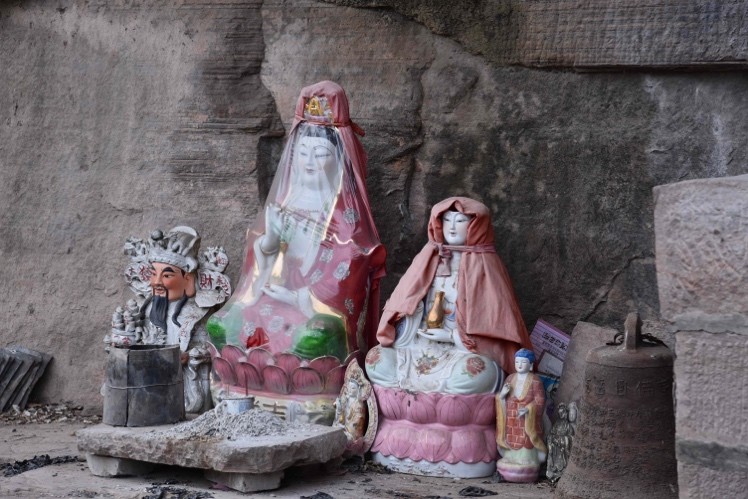
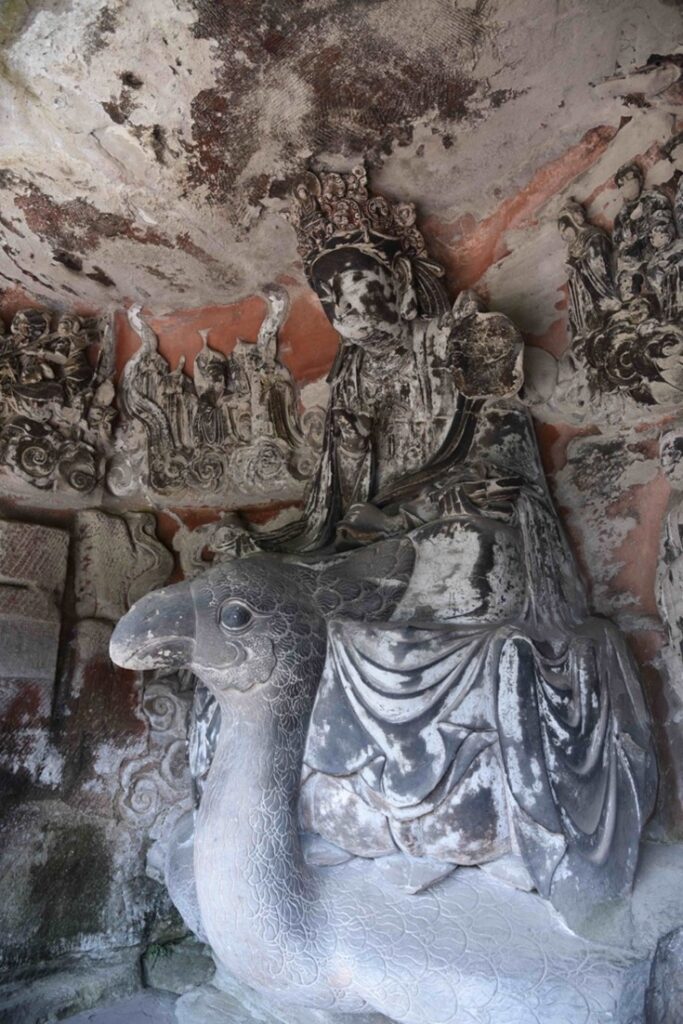




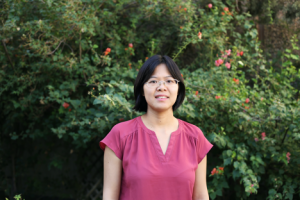 This talk focuses on the historical transformation of Mt. Jiuhua from a local mountain to a national pilgrimage destination and the ways in which Mt. Jiuhua became the divine abode of Dizang Bodhisattva (Skt. Kṣitigarbha), a savior of the underworld beings in Chinese Buddhism, in the late imperial period (14th–20th centuries). This study explains the making of the sacred mountain by analyzing four salient features of local Jiuhua Buddhism. First, it deals with the cult of mummified bodies by looking into local mortuary practices. Jiuhua Buddhists, choosing not to follow the monastic rules concerning cremation, opted to create a successful tradition of mummy-making for the deceased Buddhists. The continuing emergence of new mummies shaped the perceived sacred atmosphere of Mt. Jiuhua. Second, by analyzing relevant precious scrolls (baojuan), it reveals how vernacular literature functioned as a medium for the localization of Dizang. The performance based on such literature that was carried out at Buddhist events was the key to the further dissemination of the image of Mt. Jiuhua as a sacred mountain. Third, it explores the devotionalpractices of the eminent Buddhist master Ouyi Zhixu (1599–1655) on Mt. Jiuhua during his sojourn, and how the highly charged religious atmosphere of Mt. Jiuhua facilitates Zhixu’s devotion to Dizang. Fourth, it argues that the sacredness of the mountain was constructed and negotiated through pilgrimage practices, evidenced by many material objects used in pilgrimage. In summary, in explicating the uniqueness of Jiuhua Buddhism, this study adopts an interdisciplinary approach that bridges religion and geography and contributes to the study of sacred space in Chinese religion. By challenging the artificial dichotomy between “institutional” and “popular” religion and using understudied local materials, this study provides a different evaluation of the vitality of Ming-Qing Buddhism by focusing on religious practices.
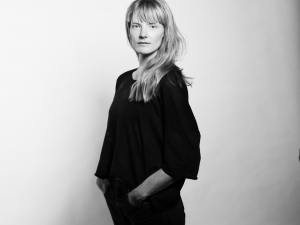 Few icons of Japanese culture are more widely recognized than the sumo wrestler. He sports a loin cloth and a slicked back topknot. His hulking body is aimed to engage. And the sumo wrestler is always a man, in the popular imagination at least. The Japan Sumo Association, a quasi-governmental corporation, champions itself as the custodian of a divine affair cultivated by male deities and mortal men, and exclusive of women. Juxtaposing modern and contemporary sumo literature with historical documents and present-day practices, Dr. DeWitt Prat will peer behind the icon to show how the fantasies surrounding sumo obscure the richness and diversity of its cultural history, a history that includes women.
 While, within Buddhist Studies, there has been considerable disagreement on the relationship between Buddhism and law, it has been a vastly understudied subject that has fortunately received more academic attention in the past decade. Scholars in the past have equated Buddhist ethics or philosophy with Buddhism tout court. TW Rhys Davids, for example, once remarked that “in the strict sense of the word there is no Buddhist law; there is only an influence exercised by Buddhist ethics on changes that have taken place in customs” (1914: 827). On the other extreme, Rebecca French has positioned for the case of Tibet that “[m]ind training and inner morality are also at the center of the legal system for Tibetan Buddhists” (French 1998: 519) and that “[a]ll laws were understood as religious” (1995: 345). Contemporary scholars of Buddhism and law such as Lammerts and Schonthal attempt to find middle ground, in which Buddhist practice (ie, what Buddhists do), as evidenced either by texts or human conduct, takes center stage. In this talk, I will present a view from early modern Tibet on the complex question of how Buddhism and law intertwine. Using examples from prescriptive legal texts and descriptive legal cases, I will demonstrate in this talk how this entwinement was thought of by Tibetan Buddhists and how this played out in society.
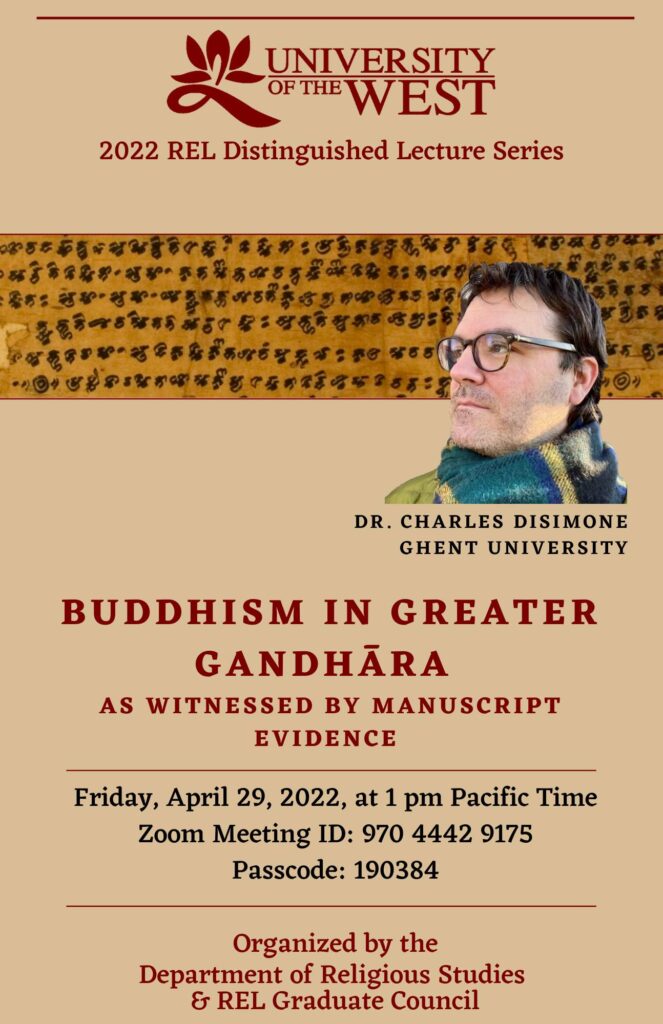
 In the modern world we live in one is presented with a seemingly incalculable number of books to choose from, each and every one a perfect product of precise publication parameters printed on pristine pages. For scholars it is as simple as plucking a well-edited tome off a library shelf or, even easier, pressing one’s finger over a ‘download’ virtual button to have primary source material in its original language or even a well-thought (and sometimes not so well thought) translation. These beautiful editions and translations and the studies that result from them are the products of the gritty work of scholars puzzling over various manuscript materials. This talk is designed as a sort of ‘how it’s made’ instruction and will outline the process of the philological and textual study of Buddhist manuscripts from broken artefacts in the ground to critical editions. Recent manuscript discoveries in Greater Gandhāra will serve as focus point around which the talk will revolve.
 Since the 1980s, North American Buddhist communities have been the site of recurring sexual misconduct and abuse allegations. While efforts to bring about justice have been hampered by denial and deflection from teachers, community leaders, and board members, a number of grassroot initiatives have responded more effectively to abuse. Drawing on ethnographic research in multiple North American and transnational Buddhist communities, we identify an emerging Buddhist sexual ethics in these grassroots justice efforts. We will focus, in particular, on three significant responses to abuse: transparency and accountability, sexual consent, and a survivor-centered orientation. We will map each onto classical Buddhist sexual ethics, illuminating areas of disjunction and overlap. Taking our cue from survivor-center advocacy, we argue that, although a Buddhist sexual ethics is locatable in textual traditions or lineage-based teachings, only critical constructive approaches make classical Buddhist sexual ethics useful for just responses to abuse.
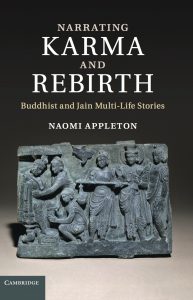 In the famous Lotus Sūtra parable of the burning house, the father promises his three sons three types of vehicle with which they can play, in order to get them to leave the building. When they get outside, their gifts are identical. As any student of Buddhism knows, the three vehicles represent the three ways to reach liberation in early Buddhism: the bodhisattva path leading to full and perfect buddhahood; the path of the śrāvaka or “hearer”, leading to arhatship; and the vehicle that leads to becoming a pratyekabuddha, an independent or solitary buddha. The one vehicle is, of course, the Mahāyāna or “Great Vehicle”. This parable paints a simple picture of the three vehicles of mainstream Buddhism being supplanted by the all-encompassing Mahāyāna, and this has been much repeated in scholarly literature. This paper, which emerges from a collaborative project funded by the UK Arts and Humanities Research Council, offers a more complicated assessment of early Buddhist accounts of paths, vehicles and buddhas, with a focus on Indian narrative literature on both sides of the Mahāyāna divide. Was the idea of three paths or vehicles really taken for granted in non-Mahāyāna contexts? And how do Mahāyāna sources make sense of these categories of liberation as they seek to offer new perspectives? By exploring a range of narrative literature that engages these debates, we shed new light on ideas about buddhahood, and on the role of these ideas in the distinction between Mahāyāna and non-Mahāyāna thought.
 In the grand narratives of the transmission of Buddhism to China, only beginning in the early fifth century did Indian Buddhist literature come to be translated into Chinese in a manner both accurate and comprehensible. Though “accurate” is arguably a normative assessment that we might question, there can be no doubt that many pre-fifth-century Chinese translations of Indian Buddhist texts are very difficult to understand and that later Chinese Buddhists on the whole rarely read, studied, or commented on them. As scholars have in recent years analyzed in more detail the texts attributed to key early translators such as Dharmarakṣa 竺法護, Zhi Qian 支謙, and An Shigao 安世高, we have learned much more about the how these early translations worked. Yet while it is now often possible for us, armed with our knowledge of parallel Indic texts, to see how these early translations were intended to work, it is much harder to know how or whether Chinese readers would have made sense of them. In this paper, I will examine whether early Chinese Buddhists were able to understand their scriptures by looking at the very few cases where we have access to (1) a difficult-understand early Chinese translation, (2) a parallel Indic text that allows us to be nearly certain how the translation was intended to work, and (3) an early Chinese commentary that allows us to see how the passages were understood. Such commentaries once existed for a fair number of pre-Kumārajīva Chinese Buddhist scriptures, though only a few survive within the Chinese Buddhist canon. In recent years, a number of new (albeit fragmentary) commentaries to pre-fifth-century translations have come to light from the Dunhuang and Turfan manuscripts. Drawing from these examples, in this talk I will discuss some cases where early Chinese commentaries evidently preserved accurate knowledge of the original Indian texts that had not been included in the translations proper or which had in the translations been rendered in an impossible to understand form. Here, in short, we have evidence for a living interpretive community, presumably one originating in the original translation event itself, that at least sometimes provided a scaffolding that would have made even impossible-to-understand Chinese translations comprehensible.
 Sam van Schaik,